Choosing the best treatment starts with confirming what is happening inside the tooth and whether the tooth can be restored predictably. You will learn how dentists make that decision, what a properly completed root canal involves, and how to compare treatment plans beyond the advertised procedure or price.
Key takeaways
- Pain alone cannot confirm an infected or irreversibly damaged pulp.
- Seek urgent dental assessment for facial swelling, fever, or trouble swallowing.
- Single-visit treatment is not suitable for every infected or complex tooth.
- Compare the final restoration, retreatment risk, and total treatment time—not just the root canal fee.
How dentists confirm whether the pulp is infected or irreversibly damaged
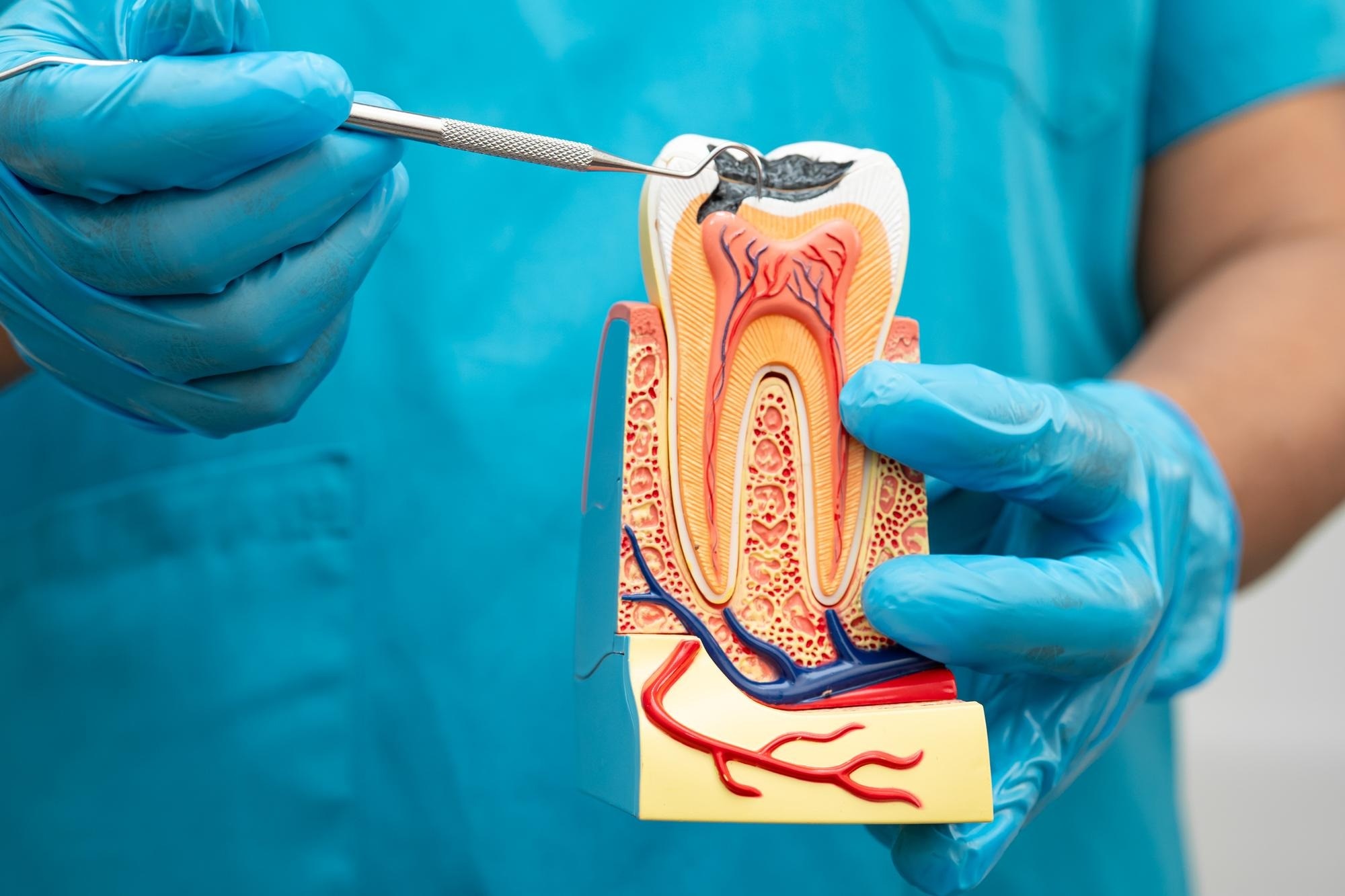
Pain alone cannot establish an infected tooth diagnosis. A dentist compares your symptom pattern with responses from the affected tooth and signs around its root. A severely painful tooth can have reversible inflammation, while a painless tooth can contain dead pulp.
- Reversible pulpitis causes brief, sharp pain to cold or sweet stimuli that stops soon after removal. The pulp remains responsive and can recover.
- Irreversible pulpitis causes lingering cold pain, spontaneous pain, heat sensitivity, or poorly localised pain. The inflammation will not recover.
- Pulp necrosis produces no reliable response to cold or electric testing. Calcification, recent trauma, or an inadequate test can create a false negative.
- An abscess causes localized swelling, pus, tenderness to biting, and pain on percussion or palpation. These abscess symptoms often accompany necrotic pulp.
Confirmation uses several checks:
- Cold or electric sensibility testing, interpreted against a neighbouring healthy tooth rather than alone.
- Percussion, palpation, and bite testing to identify inflammation around the root or a cracked tooth.
- Periodontal probing; one deep, narrow pocket can suggest a root fracture or periodontal source.
- Tooth-specific periapical radiographs to show bone changes, widening around the root, or untreated anatomy. Cone-beam computed tomography adds detail when two-dimensional images do not explain the findings.
When tooth pain or swelling needs urgent assessment
Pain that is worsening rather than settling, or swelling that is spreading, needs prompt dental assessment. These urgent root canal symptoms can signal an abscess extending beyond the tooth, where delay raises the risk of deeper tissue infection.
| Symptom | Why it matters | What to do |
|---|---|---|
| Facial swelling and fever | Suggests spreading infection or systemic involvement | Seek same-day dental care |
| Difficulty swallowing or breathing | Swelling may be affecting the throat or airway | Seek emergency medical care immediately |
| Pus, a bad taste, or rapidly increasing swelling | Indicates drainage from an abscess | Arrange urgent dental treatment |
| Severe pain that is not improving with recommended analgesics | The source remains active or another diagnosis needs checking | Contact a dentist promptly |
A tooth can remain sore for several days after root canal treatment because the tissues around its root were inflamed before treatment or irritated during instrumentation. Worsening swelling, fever, or pain that fails to improve is different; do not simply take more pain medicine.
Dental abscess antibiotics do not remove dead or infected pulp, disinfect the root canals, or seal the route through which bacteria entered. For a localized infection, the priority is definitive treatment: pulp removal and root canal treatment, drainage, or extraction when the tooth cannot be predictably restored.
Antibiotics are reserved mainly for fever, malaise, diffuse swelling, cellulitis, spreading infection, or reduced immune defenses, and they supplement—not replace—source control.
What happens during a single-visit or multi-visit root canal
A root canal can be completed in one appointment or divided into two or more, depending on whether the canals can be cleaned, dried, and sealed predictably.
- The dentist numbs the tooth and places rubber dam isolation. The dam blocks saliva and oral bacteria while protecting you from swallowing instruments or irrigants.
- An opening is made through the crown to reach the pulp chamber and canals.
- An electronic apex locator working length is used with periapical radiographs to measure each canal. Working too far beyond the apex can injure surrounding tissues; stopping short can leave infected tissue untreated.
- Small instruments remove infected pulp and shape the canals. Sodium hypochlorite and EDTA irrigation dissolve organic debris, disinfect the canal, and remove the inorganic smear layer. Irrigants must remain inside the canal because sodium-hypochlorite extrusion can cause severe pain, swelling, bruising, and tissue injury.
- The cleaned, dry canals are filled and sealed with root-filling material.
- The access opening receives a temporary or definitive restoration. A leaking temporary filling can recontaminate the canal, while delaying cuspal coverage can increase fracture risk.
Treatment is divided into appointments when drainage continues, symptoms are difficult to control, or a canal cannot be dried. The dentist may place calcium hydroxide or another intracanal medicament, seal the tooth with a temporary filling, and complete obturation at a later visit.
Multiple visits do not automatically provide better disinfection; they address a clinical problem that prevents reliable sealing today.
When root canal treatment is not the best choice—and what restoration follows
Root canal treatment is predictable only when the tooth has enough sound structure to seal and function afterward. Extraction is usually the better choice when tooth restorability is poor, a vertical root fracture splits the root, or periodontal bone support cannot hold the tooth securely.
Warning signs that the tooth may not be restorable include:
- No sound tooth structure remains above the gumline for a restoration to grip.
- Decay extends deep into the root or a crack reaches below the gumline.
- The tooth cannot be isolated from saliva and sealed reliably.
- Bone loss leaves an unfavourable attachment level or severe mobility.
- A fracture extends vertically through the root.
The final restoration depends on what remains after decay, cracks, and the access opening are removed:
| Remaining structure | Usually appropriate | Why |
|---|---|---|
| Intact ridges and limited access damage | Bonded filling | Preserves sound enamel and dentine when biting forces are manageable |
| Moderate loss of tooth structure, especially in a posterior tooth | Crown after root canal treatment | Covers weakened cusps and reduces fracture risk under heavy chewing |
| One or more weakened cusps with enough perimeter structure | Onlay or overlay | Provides cuspal coverage without removing as much sound tooth as a full crown |
A minimally damaged front tooth may need only bonded filling material; a heavily restored molar often needs cuspal coverage. Delaying the definitive restoration permits leakage and leaves the tooth vulnerable to fracture.
Persistent disease does not automatically require extraction. Retreatment or apical surgery can be considered when the tooth remains restorable and the cause is a missed canal, leakage, or another correctable problem.
How to compare root canal treatment plans and judge long-term value
A tooth with one visible canal may have additional canals, a hidden crack, or a fracture extending below the gum. To compare root canal treatment plans, ask what each dentist found, not only what the procedure costs.
| Detail to compare | Plan A | Plan B |
|---|---|---|
| Canals and cracks | Number of canals identified; crack checked with probing and bite testing | Same findings, with an explanation of any uncertainty |
| Imaging | Digital dental X-rays and the views taken | Limited-field cone-beam computed tomography CBCT when extra anatomy, resorption, fracture, or unusual root anatomy needs clarification |
| Visibility | Dental operating microscope and magnification used for locating canals and removing obstructions | Loupes or unaided treatment, with the clinical reason stated |
| Clinician experience | Training, endodontic case volume, and experience with curved or calcified canals | Comparable evidence, or referral to an endodontist |
| Aftercare | Definitive restoration, review timing, and what happens if pain or swelling persists | Written follow-up plan and named contact |
CBCT should answer a specific diagnostic question; routine scanning adds radiation without guaranteeing better treatment. A plan that ignores a suspected crack or cannot explain how the tooth will be sealed is poor value, even if it is cheaper.
Ask what happens if disease persists: investigation should include missed canals, inadequate filling, coronal leakage, fracture, and non-endodontic disease. Nonsurgical retreatment, apical surgery, or extraction may follow, depending on the cause and restorability. Prabhuta Dental Care can be useful to compare when its clinician explains these contingencies rather than presenting one fixed procedure.
Related service
Root Canal Treatment (RCT) Root Canal Treatment (RCT) – Save Your Natural Tooth Root Canal Treatment (RCT) is a highly effective dental procedure used to treat infected or... View service → |
Frequently asked questions
How do dentists confirm whether a tooth needs root canal treatment?
They combine your symptom pattern with pulp tests, tapping or biting tests, gum assessment, and dental X-rays. Pain alone does not establish the diagnosis.
When does tooth pain or swelling need urgent assessment?
Arrange urgent dental care for facial or gum swelling, fever, worsening pain, pus, difficulty opening your mouth, or trouble swallowing or breathing.
What happens during a single-visit or multi-visit root canal?
The dentist removes diseased pulp, cleans and shapes the canals, disinfects them, and seals them. A multi-visit plan uses a temporary filling between appointments when further disinfection or monitoring is needed.
When is root canal treatment not the best choice?
Extraction may be more suitable when the tooth cannot be restored, has a severe vertical root fracture, or lacks enough healthy structure for a stable restoration. The missing tooth then needs a replacement plan.
How should you compare root canal treatment plans?
Compare diagnosis, tooth restorability, who performs each stage, included imaging, number of visits, temporary and final restorations, follow-up, and the total cost over the tooth’s expected lifespan.