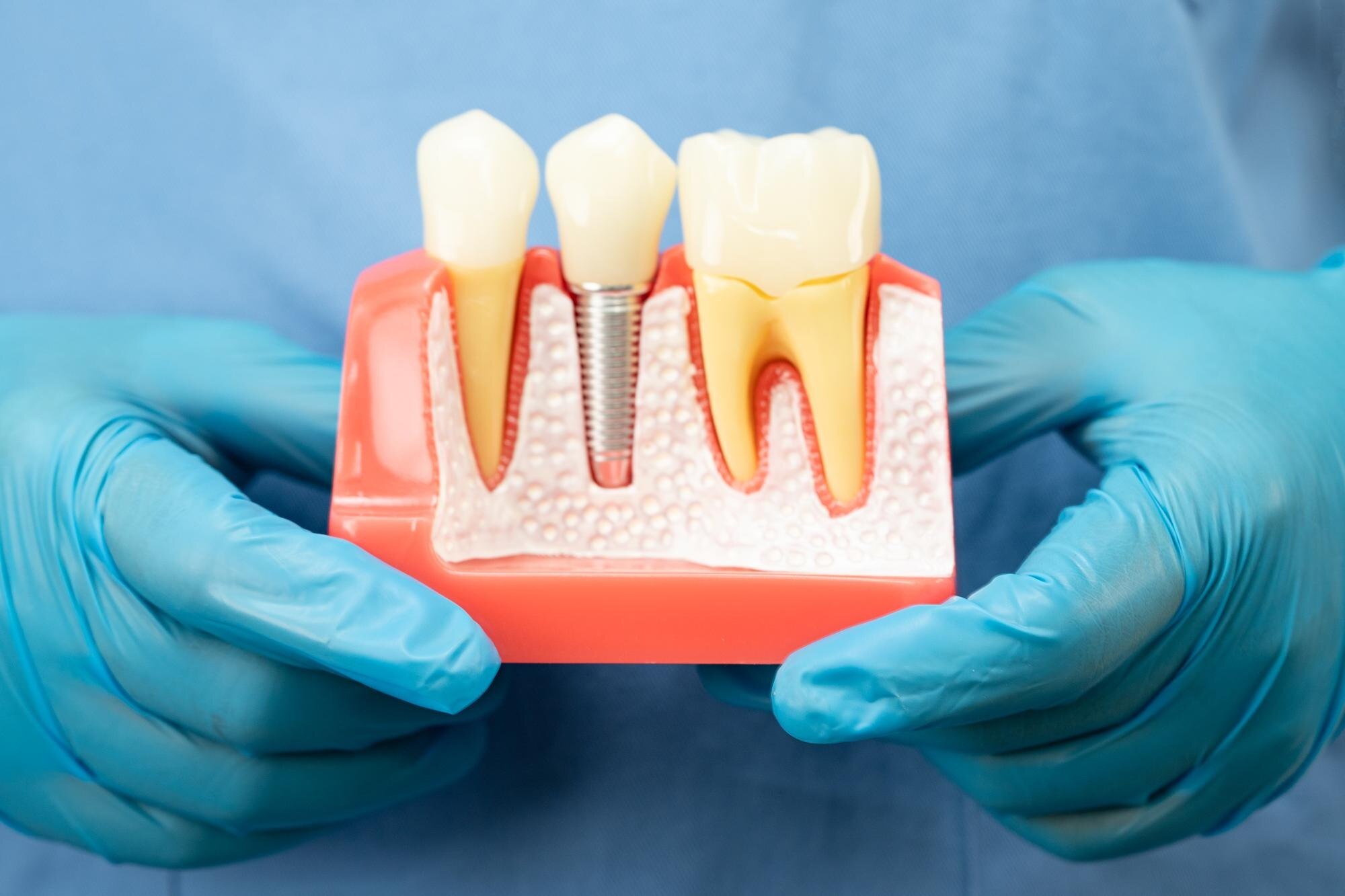
An implant consultation should produce more than a treatment date and a quoted price. You need to know whether the tooth can be saved, whether an implant is the right option, who will perform each stage, what materials and procedures are proposed, and how problems will be handled years later.
Key takeaways
- Ask about implant-specific training and experience with cases like yours.
- Request imaging-based evidence that an implant suits your diagnosis.
- Confirm bone, gum tissue, healing risks, and any required preparation.
- Get a dated list of procedures, restorations, aftercare, and total costs.
What qualifications and personal experience do you have with my type of case?
Ask for evidence that the clinician can manage your specific case, not a generic “success rate.” Begin with: “What dental degree and implant-specific training do you hold?” Then ask about:
1. Years of implant experience and the number of comparable implant cases treated. Request separate survival and complication figures for single-tooth, multiple-tooth, front-tooth, molar, grafted, and medically complex cases, with the follow-up period stated. Ask what “success” includes: an implant remaining in place, or also no pain, infection, bone loss, mobility, and prosthetic problems.
2. Who will examine you, place the fixture, design the restoration, and fit the final crown. If clinicians divide the work, record each person’s qualifications, responsibility, and experience in implant surgery, periodontal management, and restoration. Ask who coordinates the plan and who manages complications.
3. Whether the implant is planned backward from the final tooth shape. The discussion should cover position, emergence profile, cleansability, and bite; the surgeon and restorative clinician must agree on the crown design before surgery. Ask to see anonymised examples of comparable cases and the follow-up behind them.
A technically integrated implant can still produce an unattractive, overloaded, or difficult-to-clean crown when planning stops at bone placement. Confirm that the proposed team evaluates the finished tooth, not just the fixture.
What diagnosis proves that an implant is the right treatment?
A defensible diagnosis shows not only where the tooth is missing or failing, but why an implant is preferable. Ask for a clinical examination, periodontal assessment, bite evaluation, and review of the teeth beside the gap. Request a written diagnosis naming the gum condition, bite forces, nearby anatomy, and proposed alternatives.
If the damaged tooth remains, ask: “Can this tooth be predictably saved with root-canal treatment and a proper crown?” A badly damaged tooth is not automatically an implant case.
Ask the specialist to compare these options:
| Option | Adjacent teeth | Maintenance | Cost | Treatment time | Appearance | Bone preservation |
|---|---|---|---|---|---|---|
| Conventional fixed bridge | Prepared as supports | Clean under the bridge | Compare total fees | Usually shorter | Fixed tooth replacement | Does not preserve the missing-root area |
| Removable partial denture | Usually preserved | Remove and clean daily | Compare future adjustments | Usually shorter | May be less natural | Does not preserve the missing-root area |
| Orthodontic space closure | Moved rather than replaced | Retainers and routine care | Compare orthodontic fees | Often longer | Depends on tooth movement | No implant bone needed |
| Leave the space untreated | Teeth may drift | Monitor changes | Lowest immediate cost | No procedure | Visible gap remains | Bone may shrink |
Ask whether you need a three-dimensional CBCT scan for dental implants and what specific finding will change the plan. A limited-field CBCT scan can show bone width, sinus anatomy, and the mandibular nerve, but exposes you to more radiation than ordinary dental radiographs.
Ask why ordinary radiographs are insufficient and whether the scan will alter implant size, position, grafting, or the decision to proceed.
Do I have enough bone and healthy tissue for predictable healing?
Ask, “Is the ridge wide and tall enough for the planned implant, and how did you measure it?” The answer should come from clinical examination and, when needed, three-dimensional CBCT measurements, not a visual guess.
1. If bone is insufficient, ask whether you need bone grafting, ridge augmentation, a sinus lift, or soft-tissue treatment around implants. Request the graft material’s name, procedure site, whether treatment occurs before or during implant placement, and the extra healing period.
Grafting improves placement conditions but does not guarantee that an implant can eventually be placed.
2. Discuss every nicotine product: cigarettes, vaping, chewing tobacco, and nicotine replacement. Ask what cessation period the clinician requires, because nicotine exposure can impair healing and increase complications.
3. Tell the clinician whether you have diabetes and ask what blood-glucose or HbA1c control is required before surgery. Report gum disease, blood-thinning medicines, bisphosphonates or other osteoporosis medicines, previous radiation treatment, and any condition that affects healing.
4. Active periodontal infection must be treated before implant surgery. Ask how oral hygiene will be assessed and what maintenance schedule you must follow.
5. If you have had periodontitis, ask how the clinician will reduce inflammation risk around the implant and what evidence will show that your gums are ready, such as controlled bleeding and probing findings.
Request the clinician’s own survival and complication figures, separated by smoking status, grafting, implant location, and follow-up period; “success rate” alone is too vague.
What exactly will be placed, restored, and delivered on each date?
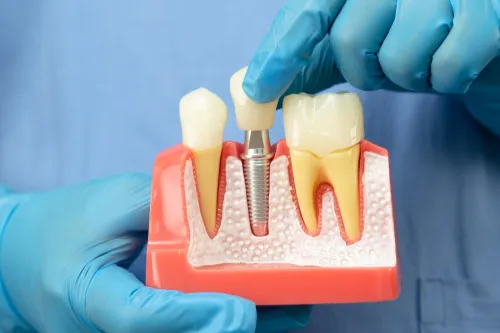
Ask for a date-by-date plan naming what is placed, restored, and delivered at every appointment. Request the implant manufacturer, implant material, diameter, length, surface type, and component catalogue. Confirm that replacement screws, abutments, and other parts will remain obtainable years later.
Ask what the warranty covers and excludes, including smoking, trauma, missed maintenance, and normal wear.
| Plan | What happens | What to confirm |
|---|---|---|
| Immediate placement/loading | The implant may be placed after extraction and loaded with a temporary tooth | Extraction-day placement does not mean chewing is permitted; immediate loading depends on primary stability, position, bite forces, and bone quality |
| Delayed placement/loading | The socket or graft heals before implant placement or restoration | Ask how long graft healing and implant integration will take, and whether you will wear a temporary tooth |
Ask whether the final restoration will be a screw-retained crown or cement-retained crown, which crown material is planned, how shade and translucency will be selected, and who fabricates it. Confirm the laboratory’s role, the number of fitting appointments, and how long the temporary should last.
Request the complete timeline: extraction, graft healing, implant integration, soft-tissue shaping, impressions or scans, laboratory fabrication, and final fitting. The surgery date is not the finished-treatment date. Ask what happens if the temporary breaks, the implant fails, or the final crown fractures, loosens, or needs a shade, contour, or bite adjustment.
What risks, maintenance duties, and costs will I carry after treatment?
Your post-treatment exposure includes implant failure risk, inflammation, repairs, replacement parts, and recurring maintenance—not just the surgical fee.
Ask for the clinician’s own figures, separated by implant location, smoking status, grafting, and follow-up period. “Success rate” is incomplete without a definition.
| Measure | What it means | What to ask |
|---|---|---|
| Survival | Implant remains in place | Does this include pain, infection, bone loss, mobility, or prosthetic problems? |
| Success | Implant and restoration remain healthy and functional | Which failures, symptoms, and crown or screw problems are counted? |
| Complication rate | Biological or mechanical problems after treatment | How many cases needed treatment, and over what follow-up period? |
Ask how peri-implant mucositis and peri-implantitis prevention will work. Your implant maintenance plan should include plaque-control instruction, professional cleaning, probing, and comparison with baseline radiographs; do not wait for pain, because inflammation can progress to supporting-bone loss. Clarify how diabetes, periodontal disease, nicotine use, and oral hygiene change your schedule.
Ask who provides long-term maintenance and how often visits are expected. Then ask, “What happens if the implant fails, the crown fractures, the screw loosens, or the result looks unacceptable?”
Request a written estimate separating the surgical fee, implant fixture, abutment, temporary tooth, definitive crown or denture, imaging, grafting, sedation, replacement parts, and complication treatment. Read the dental implant warranty and cost terms for exclusions involving smoking, trauma, missed maintenance, and normal wear.
Prabhuta Dental Care in Vadodara can be assessed with this same checklist, comparing accountability and total exposure rather than headline prices.
Related services
Dental Implants/ full mouth implant Dental Implants/ full mouth implant Dental Implants & Full Mouth Implants Permanent Solution for Missing Teeth At Prabhuta Dental Care, we offer advanced Dental Implant and Full Mouth... View service → |
Dental Check-up & Consultation Dental Check-up & Consultation At Prabhuta Dental Care, we provide comprehensive dental check-ups and expert consultations to help maintain your oral health and detect dental... View service → |
Frequently asked questions
What qualifications should I ask an implant specialist about?
Ask, “What dental degree and implant-specific training do you hold?” Then ask how much experience the clinician has with your type of case and which parts of treatment they personally perform.
What diagnosis shows that a dental implant is the right treatment?
Ask the clinician to explain the diagnosis, examination findings, and imaging that support an implant rather than another option. You should understand the condition of the tooth, roots, surrounding teeth, gums, and supporting bone.
How do I know whether I have enough bone and healthy tissue?
Ask how the clinician evaluated bone volume, bone density, gum tissue, and infection. If preparation is needed, request the procedure, healing period, added risks, and effect on the treatment schedule.
What should I confirm about the implant treatment schedule?
Ask what will be placed or delivered at each appointment, including the implant, temporary tooth, abutment, and final restoration. Request the expected dates, healing intervals, adjustments, and conditions that could change the schedule.
What costs and responsibilities continue after implant treatment?
Ask for the complete cost of diagnosis, surgery, preparation, restoration, follow-up, repairs, and replacement components. Also confirm cleaning instructions, review appointments, warning signs, implant risks, and what happens if healing or the restoration fails.