A tooth that hurts is not automatically a tooth that needs root canal treatment, and a normal-looking X-ray does not rule out early pulp disease. You will learn how dentists confirm the diagnosis, when the tooth is suitable for treatment, what happens during each appointment, and which decisions protect the tooth afterward.
Key takeaways
- Lingering hot or cold pain can signal irreversible pulp inflammation.
- An X-ray and clinical tests determine whether the tooth is suitable for treatment.
- Root canal treatment often takes one or more visits, depending on infection and tooth complexity.
- A crown or other strong restoration protects the treated tooth from fracture.
How do you know whether the pulp needs treatment?
Lingering tooth pain after hot or cold drinks is a warning sign for irreversible pulpitis, especially when the pain continues for 30 seconds or longer after the stimulus is removed. Spontaneous pain, pain on biting, swelling, a gum boil, or a darkening tooth can indicate pulp necrosis or infection.
Yet pulp infection symptoms are not always obvious: a dead or infected pulp can cause no pain at all.
A dentist confirms the diagnosis by combining your history with several findings:
- The clinical examination checks decay, cracks, loose fillings, swelling, and gum changes.
- A cold test for teeth compares the suspected tooth with healthy neighbouring teeth; prolonged or absent response is significant. Electric pulp testing, which measures nerve response rather than blood flow, adds evidence but does not diagnose the tooth alone.
- Percussion and palpation test inflammation around the root. Bite testing helps identify a cracked tooth or pressure-related apical inflammation.
- Periodontal probing checks for isolated deep pockets that can suggest a crack or other root problem.
- A dental X-ray for root canal treatment shows decay, restorations, root shape, and surrounding bone.
A normal X-ray does not clear the pulp. Early pulpal disease can exist before inflammation causes visible apical bone changes, so symptoms and test results matter more than the image alone.
Is this tooth suitable for root canal treatment?
Root canal candidacy depends on whether the tooth can be cleaned, supported, and sealed reliably—not only on whether its pulp is infected. A vertical root fracture usually makes the prognosis poor because bacteria can enter along the split.
Inadequate remaining tooth structure, severe periodontal bone loss, poor periodontal support, or the inability to place a durable final restoration can also make extraction more predictable.
| Finding | Effect on prognosis | What to clarify |
|---|---|---|
| Restorable tooth with sound support | Root canal treatment may be a sound choice | How much healthy tooth remains |
| Vertical root fracture | The split often prevents a lasting seal | Whether the fracture is confirmed or suspected |
| Severe periodontal bone loss or poor support | The tooth may remain mobile or fail despite canal treatment | Periodontal treatment options and long-term outlook |
| Insufficient structure for a durable restoration | Leakage or fracture can cause failure | The proposed crown, onlay, or other final restoration |
A limited-field CBCT scan for root canal planning is useful when ordinary X-rays and examination cannot resolve suspected fractures, missed anatomy, resorption, or complex apical anatomy. It should not be routine for every patient because it adds radiation without answering a necessary diagnostic or treatment-planning question.
Before consenting, ask for:
- The diagnosis and tooth restorability assessment
- The expected final restoration and its timing
- Whether a CBCT scan for root canal planning is justified
- Whether an endodontist consultation is needed
Prabhuta Dental Care in Vadodara can provide one option for obtaining this assessment, including referral when specialist evaluation is appropriate.
Related service
Root Canal Treatment (RCT) Root Canal Treatment (RCT) – Save Your Natural Tooth Root Canal Treatment (RCT) is a highly effective dental procedure used to treat infected or... View service → |
What happens during a root canal, and how many visits are needed?
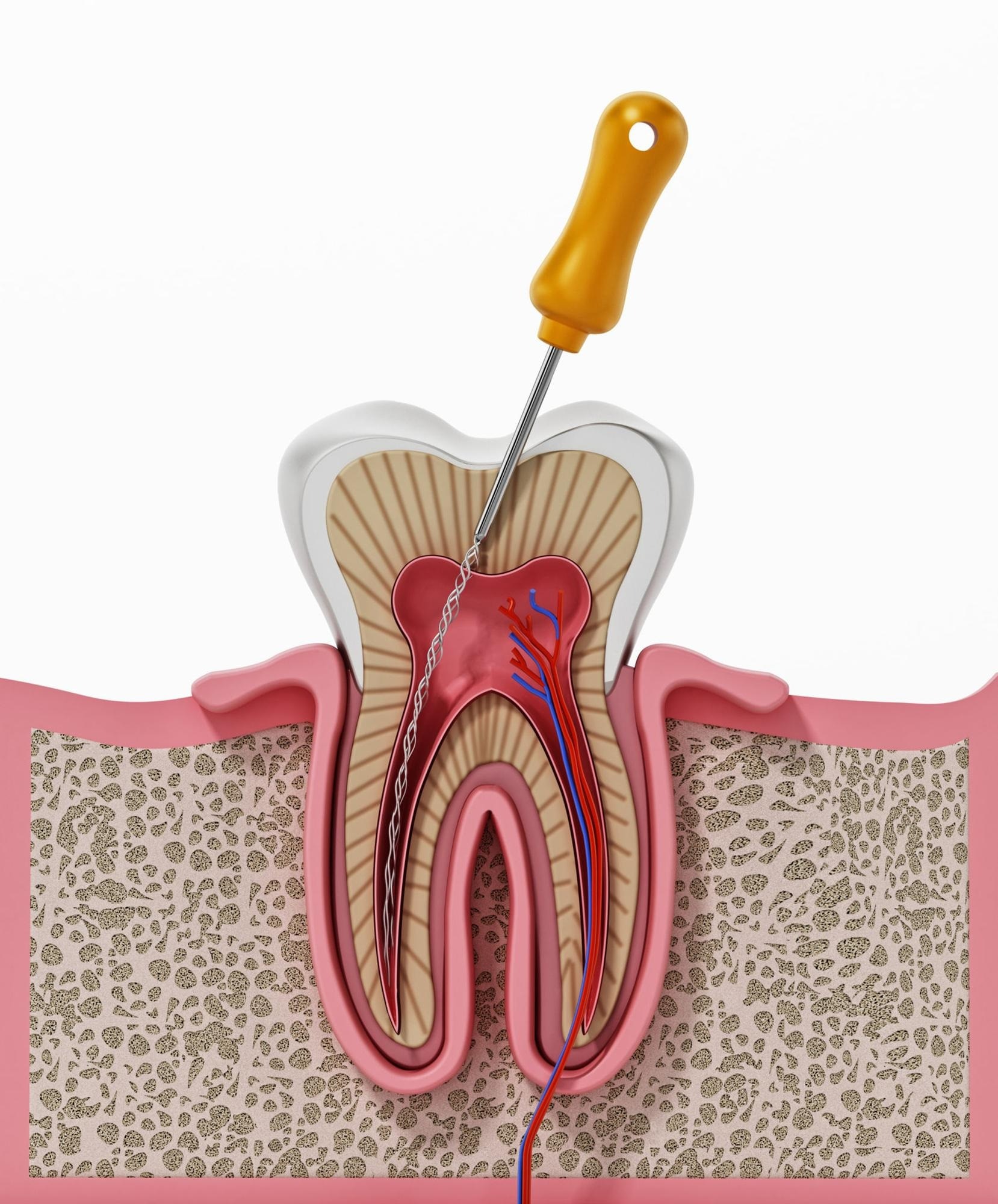
The root canal procedure steps follow a fixed sequence. After local anaesthetic, the dentist places a rubber dam around the tooth to limit saliva contamination and protect you from swallowing or aspirating instruments and irrigants. The dentist makes an access opening, removes the inflamed or infected pulp, and cleans and shapes each canal.
Canal irrigation flushes debris and microbes from spaces instruments cannot reach. Sterile instruments, disinfected equipment, proper irrigation, and infection control in dentistry are expected safety measures. The canals are then filled with a sealing material and closed; a temporary restoration is placed when the permanent restoration cannot be completed that day.
| Option | What it means | When it applies |
|---|---|---|
| one-visit root canal | Cleaning, shaping, filling, and sealing occur in one appointment | Suitable when the canals can be predictably cleaned and the tooth is manageable |
| multiple-visit root canal | Treatment is divided, with medication and a temporary seal between visits | Useful when drainage is needed, symptoms are difficult to control, anatomy is complex, or reassessment is prudent |
Neither schedule is universally better. Root canal appointment length and visit count depend on tooth position, number of canals, calcification, infection or drainage, retreatment, complex anatomy, and whether specialist care is needed. A front tooth with one accessible canal may take less time than a molar with several narrow, curved canals.
Retreatment or calcification can require additional appointments.
What will you feel during and after treatment?
Effective local anaesthetic should prevent sharp pain during root canal treatment, but you can still feel pressure, vibration, water, and instrument movement. If sharp pain occurs, alert the dentist immediately. An acutely inflamed tooth can be difficult to numb, so supplemental anaesthetic or staged treatment may be needed.
Expect tenderness or mild sensitivity when biting for several days, especially if the tooth was badly inflamed. Follow the dentist’s instructions for root canal pain relief, and take only prescribed or label-directed medicines.
Antibiotics for tooth pain do not remove infected pulp or replace cleaning, drainage, and sealing; dentists reserve them mainly for spreading infection or systemic signs such as fever and malaise.
Between appointments, root canal aftercare protects the tooth while it is vulnerable. Do not chew on a temporary filling, keep the area clean, avoid biting hard foods on that side, and return on schedule for completion and the permanent restoration.
Contact your dentist promptly if symptoms worsen rather than improve. Seek urgent care for these dental emergency symptoms:
- Increasing swelling
- Fever or marked malaise
- Severe or worsening pain
- Difficulty swallowing
- Difficulty breathing
What protects the tooth after the canals are sealed?
Canal filling is not the end of treatment. A root canal removes diseased pulp, disinfects and shapes the canals, and seals them; it does not make the tooth indestructible. Decay, large restorations, and lost tooth structure weaken the tooth, while chewing forces concentrate stress across what remains.
Tooth fracture after root canal is a major reason a treated tooth can later be lost.
The coronal seal and permanent restoration after root canal block saliva and bacteria from re-entering the canals while reinforcing the tooth. Posterior teeth often need cuspal coverage because their cusps absorb heavy chewing forces.
An onlay for root canal tooth or a dental crown after RCT depends on the remaining sound structure, tooth position, and bite.
A temporary filling is not permanent. Delaying the definitive restoration increases bacterial leakage and fracture risk, so ask how long it should last and which foods to avoid.
If symptoms or an abnormal X-ray persist, evaluation should identify the cause rather than assume extraction is necessary:
- Check for missed canals, inadequate cleaning or filling, coronal leakage, new decay, infection outside the canal, or vertical root fracture.
- Ask whether the finding represents persistent infection after RCT and whether the tooth remains restorable.
- Depending on the cause, treatment may involve root canal retreatment, endodontic surgery, restoration repair, or extraction.
Frequently asked questions
How do you know whether the pulp needs treatment?
Lingering pain after hot or cold drinks, spontaneous pain, pain on biting, swelling, a gum boil, or tooth darkening can indicate irreversible pulpitis, pulp necrosis, or infection. Your dentist confirms the diagnosis with clinical tests and dental X-rays.
Is this tooth suitable for root canal treatment?
Your dentist assesses the tooth’s remaining structure, root shape, bone support, cracks, restorability, and ability to receive a final restoration. A tooth that cannot be predictably restored may require extraction instead.
What happens during a root canal, and how many visits are needed?
The dentist numbs and isolates the tooth, removes inflamed or infected pulp, cleans and shapes the canals, fills and seals them, and then plans the final restoration. Visit count depends on the tooth, canal anatomy, infection, and treatment response.
What will you feel during and after treatment?
Local anaesthetic prevents pain during treatment. Tenderness when biting can occur afterward and usually improves with appropriate care; contact your dentist if pain worsens, swelling develops, or the temporary filling breaks.
What protects the tooth after the canals are sealed?
A permanent filling or crown restores the tooth and reduces fracture risk. Back teeth often need a crown because chewing forces place greater stress on them; avoid chewing hard foods on a temporary filling.